VeriMedic vs. a traditional ePCR
A traditional ePCR is where your crew documents, stores, and bills the call. VeriMedic isn't a replacement for it — it's the body-camera ground truth that fills it in. CaseSync syncs body-cam video, monitor data, and CAD onto one timeline and pushes pre-filled NEMSIS fields into the ePCR you already run. Here's how the two fit together.
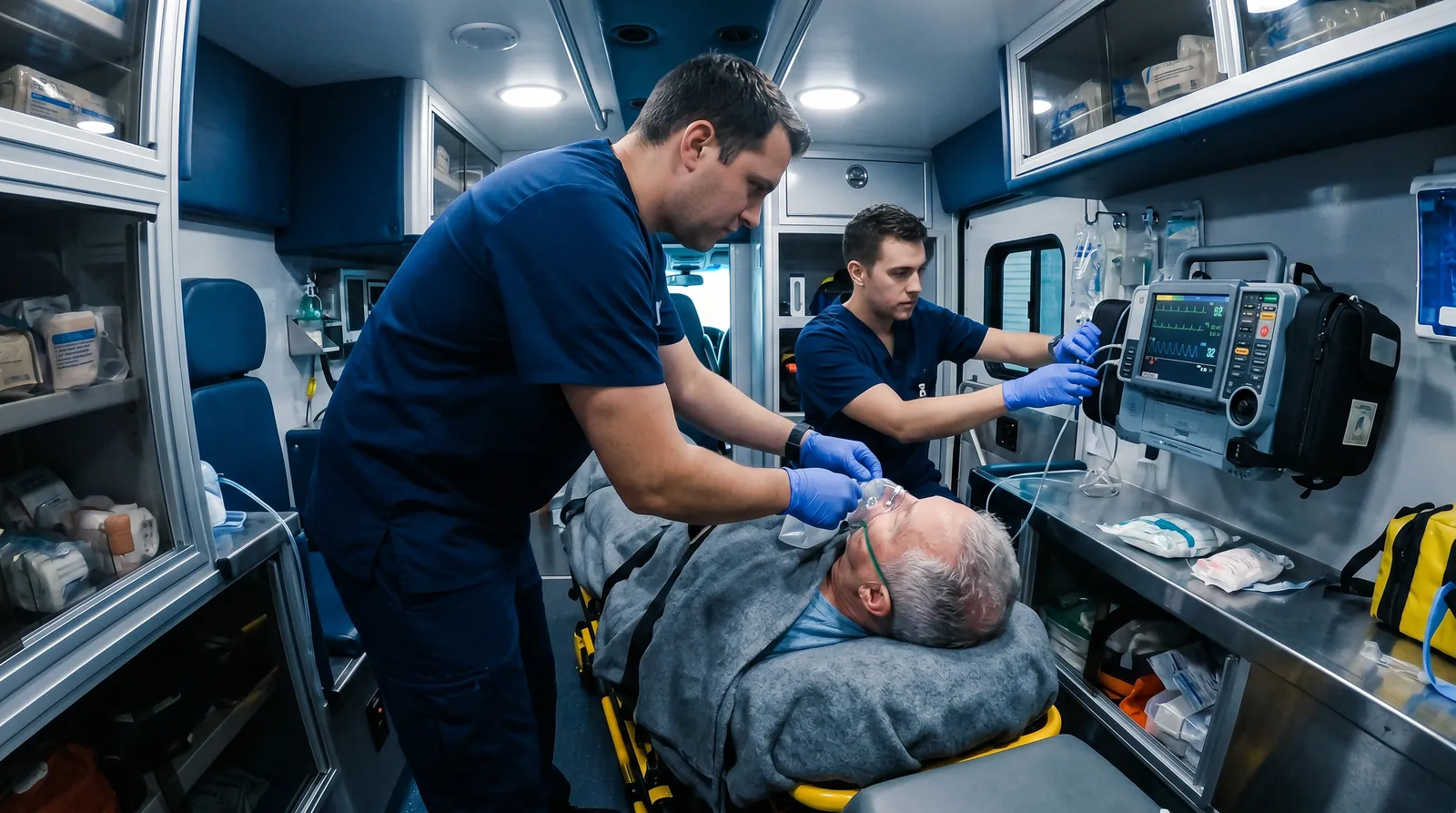
Pushed to your ePCR — 2 fields to confirm
Shown with VeriMedic body cameras. QA and analytics also work without footage.
A traditional ePCR stores the record. VeriMedic decides what goes in it.
Every EMS agency needs an ePCR — it's the system of record for documentation, NEMSIS reporting, and billing. The open question is how that record gets filled. In a traditional workflow, a paramedic reconstructs the call from memory and types it in after the fact. VeriMedic changes the input, not the system.
A traditional ePCR is the system of record an agency documents, reports, and bills in, and VeriMedic does not replace it. VeriMedic CaseSync sits in front of the ePCR — reconciling body-camera video, monitor data, and CAD onto one timeline and pushing pre-filled NEMSIS fields into the existing ePCR — so the record is built from what happened on the call instead of typed from memory afterward.
A traditional ePCR, with and without VeriMedic.
The ePCR is the same system either way. What changes is whether the record is reconstructed from memory or built from the call itself.
| Dimension | A traditional ePCR alone | With VeriMedic CaseSync |
|---|---|---|
| How the record gets filled | A paramedic types it from memory after the call | Pre-filled NEMSIS fields drafted from the call, confirmed by the crew |
| Source of the data | The crew's recollection of what happened | Body-cam video, monitor data, and CAD, synced to the second |
| Documentation time | A full record written by hand on every call | The crew confirms a record instead of retyping it |
| Vitals & 12-lead | Re-entered or attached manually | Pulled from the monitor onto the timeline |
| Times (dispatch, on-scene) | Entered from memory or looked up later | Captured from CAD automatically |
| What QA reviews | The record the crew wrote | The synchronized footage of the call |
| Missed or late interventions | Only as accurate as the record | Visible on the timeline |
| System of record | Your ePCR | Still your ePCR — VeriMedic feeds it, it doesn't replace it |
| What it is | A documentation, reporting, and billing platform | The body-camera ground truth that fills the ePCR |
VeriMedic is not an ePCR and doesn't replace yours. It's the layer that fills your existing ePCR with a record built from the call itself.
Two ways the same record gets filled.
The ePCR doesn't change. What changes is whether the record comes from memory or from the call.
A traditional ePCR alone
- 1
The crew runs the call, then sits down to record afterward
- 2
Times, vitals, and interventions are entered from recollection
- 3
Monitor strips and CAD are reconciled by hand, if at all
- 4
The finished record becomes the only record of the call
- 5
QA reviews that record — accurate only as far as memory was
With VeriMedic CaseSync
- 1
Body camera, monitor, and CAD capture the call as it happens
- 2
CaseSync reconciles every stream onto one synchronized timeline
- 3
Pre-filled NEMSIS fields are pushed into your existing ePCR
- 4
The crew confirms the record instead of retyping it
- 5
QA grades the call against the synchronized footage
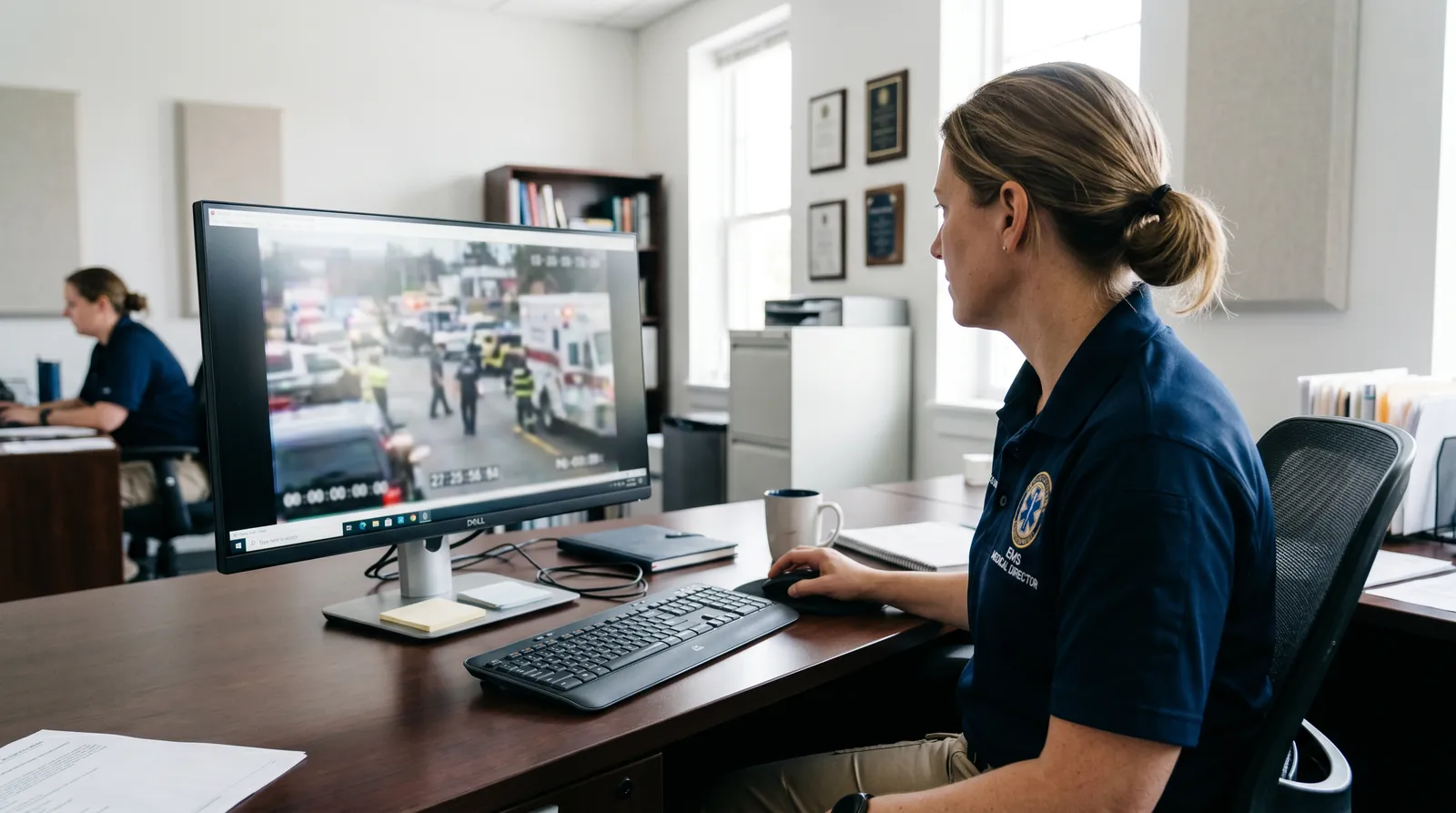
Built in Lancaster, PA by people who run the call.
VeriMedic isn't a body-camera platform built for law enforcement and adapted for EMS. It was built by the people who answer the call, review the record, and answer for the record.
- Practicing paramedics
- Designed by paramedics who record after every call.
- An EMS medical director
- QA logic built around real protocol review.
- A data architect
- Built to reconcile video, monitor, and CAD streams.
VeriMedic vs. a traditional ePCR: common questions
Straight answers for EMS leaders deciding how their patient care record should get filled.
- Is VeriMedic an ePCR?
- No. VeriMedic is a body-camera and software platform that feeds an existing ePCR. VeriMedic CaseSync reconciles body-camera video, monitor data, and CAD onto one timeline and pushes pre-filled NEMSIS fields into the ePCR an agency already runs, rather than serving as the documentation system itself.
- What is the difference between VeriMedic and a traditional ePCR?
- A traditional ePCR is the system where an EMS agency documents, reports, and bills a call. VeriMedic CaseSync is the layer in front of it: it builds pre-filled NEMSIS fields from synchronized body-camera, monitor, and CAD data so the ePCR is filled from the call instead of from memory.
- Does VeriMedic replace my ePCR?
- No. VeriMedic does not replace an agency's ePCR. VeriMedic CaseSync pushes pre-filled NEMSIS fields into the existing ePCR, so the agency keeps the documentation, reporting, and billing system it already uses while changing how that record gets filled.
- Do I still need an ePCR if I use VeriMedic?
- Yes. An agency still needs its ePCR as the system of record for documentation, NEMSIS reporting, and billing. VeriMedic CaseSync works with that ePCR, pre-filling its NEMSIS fields from the synchronized record of the call for the crew to confirm.
- Who should use a traditional ePCR without VeriMedic?
- Agencies that only need a system to document and bill calls, and that are satisfied with records written from memory, can run a traditional ePCR on its own. VeriMedic CaseSync fits agencies that want the record and their QA built on objective footage of the call.
Request a demo
Tell us what data your agency has and what you want to review. We'll walk you through CaseSync for QA and analytics, with or without body cameras.
For ambulance companies & paramedics