The whole call, reconciled into one record.
CaseSync syncs body-worn video, dispatch and CAD, the cardiac monitor, and radio and consult audio onto one clinical timeline — so the record reflects what actually happened. For the paramedic, documentation becomes confirming. For the QA reviewer, every call becomes reviewable on independent ground truth.
Pushed to your ePCR — 2 fields to confirm
Shown with VeriMedic body cameras. QA and analytics also work without footage.
You ran the call. You shouldn't have to rebuild it from memory.
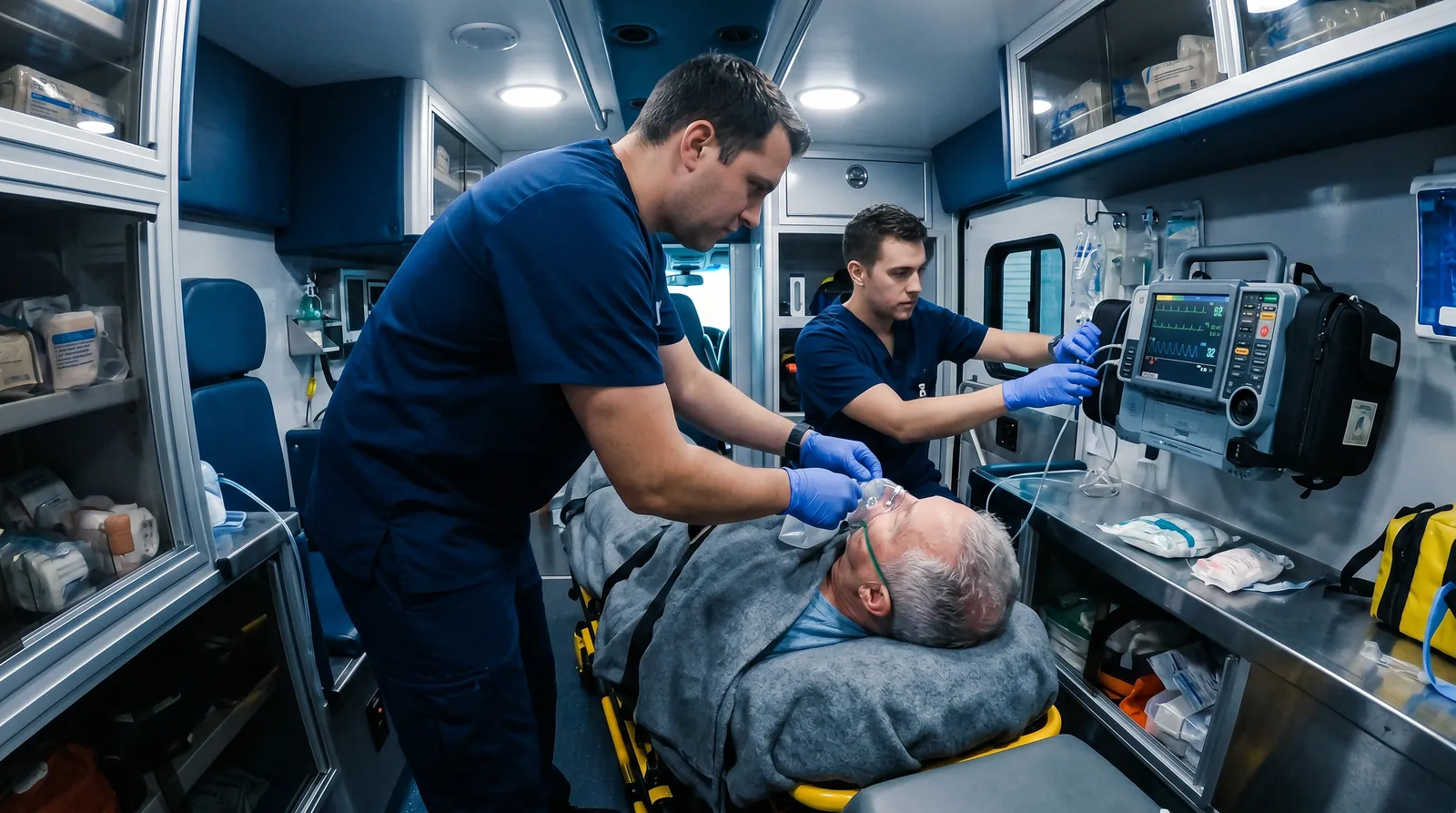
By the time you're back at the station, the hardest part of the night is supposed to be over — but the record is still waiting. CaseSync changes what that moment feels like. While you were on scene, it was already pulling together everything that happened: your body-worn video, dispatch and CAD, the cardiac monitor, radio and consult audio — all synced to one clinical timeline.
So when you sit down to record, the record is already there. Your timeline pre-fills from sources you didn't have to type, and your job shifts from composing to confirming. Med administrations, vitals, and controlled-substance witnessing line up against the exact footage — so what you document is what actually happened, not your best recollection at 3 a.m.
It follows the patient, too. The receiving hospital can see your live timeline in the trauma bay, and a structured handoff pushes to their system when the call closes. No relaying the story twice.
And when a complaint or a question comes back weeks later, the footage has your back. You're no longer the only undocumented party on scene — you're the best-documented one.
Stop spot-checking. Start seeing every call.
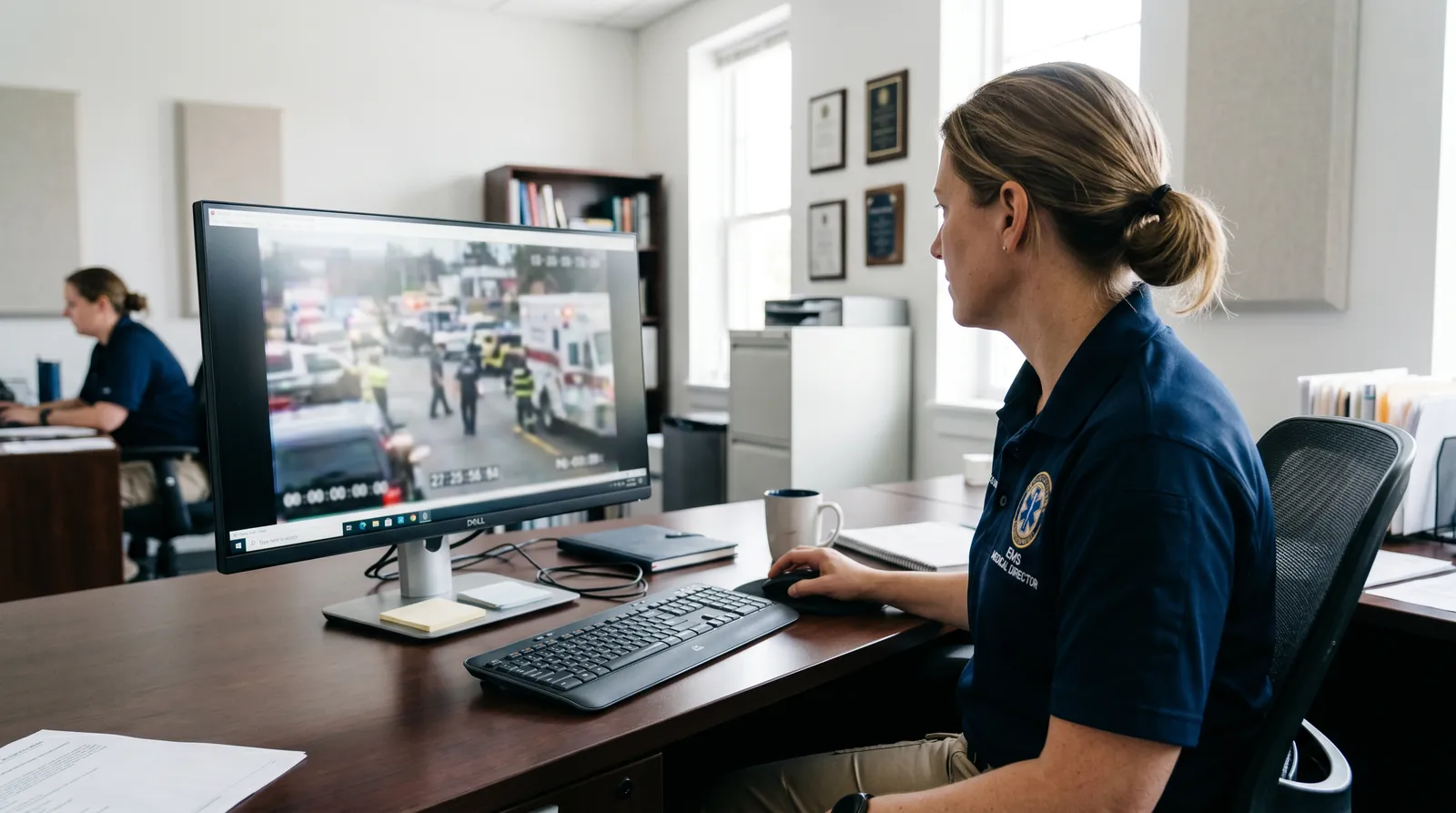
Most agencies review around 10% of calls, written from memory and graded against self-report. CaseSync flips that. Every call comes in as a reconciled record — video wired to the patient-care timeline, the finalized record source-linked to the evidence behind it — so 100% of calls can be graded against your agency's protocol on independent ground truth.
You review by exception, not by scrubbing hours of footage. The platform reconciles the documented record against the captured evidence and protocol-completeness rules, then surfaces the gaps worth your attention. It's advisory only — it never edits the record or judges clinical appropriateness. The human stays in the loop, which is exactly what keeps every observation defensible.
When something needs a closer look, the footage, the timeline, and the record for that incident pull into a single source-linked packet — so you can investigate a complaint or a clinical question starting from what the crew actually saw. Controlled substances reconcile against a per-unit, hash-chained ledger corroborated by video and access logs.
And the calls you review don't just disappear into an archive. Tagged by crew, call type, and procedure, they become a searchable training library built entirely from your own service's footage — turning everyday QA into teaching material.
The CaseSync platform: common questions
What the platform does for paramedics, reviewers, and the systems your agency already uses.
- What does CaseSync do for the paramedic?
- CaseSync builds one synchronized timeline of the call from body-worn video, cardiac monitor data, CAD, and audio, then pre-fills the record so the paramedic confirms fields instead of retyping them. It supports live hospital handoff and protects the crew's footage as an objective record of what happened.
- What does CaseSync do for the QA reviewer or medical director?
- CaseSync lets reviewers grade 100% of calls against independent ground truth rather than a sample of self-reported records. It surfaces exceptions, links every finding back to the source footage, maintains a controlled-substance ledger, and builds a searchable training library from real calls.
- Is VeriMedic an ePCR?
- No. VeriMedic is a body-camera and software platform that feeds your existing ePCR. CaseSync reconciles the call and pushes pre-filled NEMSIS fields into the ePCR the agency already runs, rather than serving as the documentation system itself.
- What gets synchronized onto the timeline?
- CaseSync syncs body-worn video, CAD, the cardiac monitor, and audio onto a single clinical timeline, so the record of the call is built from objective, time-aligned sources instead of memory.
See the platform on your own calls.
Request a demo and we'll walk your service through CaseSync end to end — from the body camera turning on to a reviewed, confirmed record.