VeriMedic vs. traditional ePCR QA
Traditional EMS quality assurance reviews the record your crew typed after the call. VeriMedic CaseSync grades the call itself — synchronized body-camera video, monitor data, and CAD — and pre-fills NEMSIS fields into the ePCR you already use. Here's how the two approaches compare for QA managers and operations leaders.
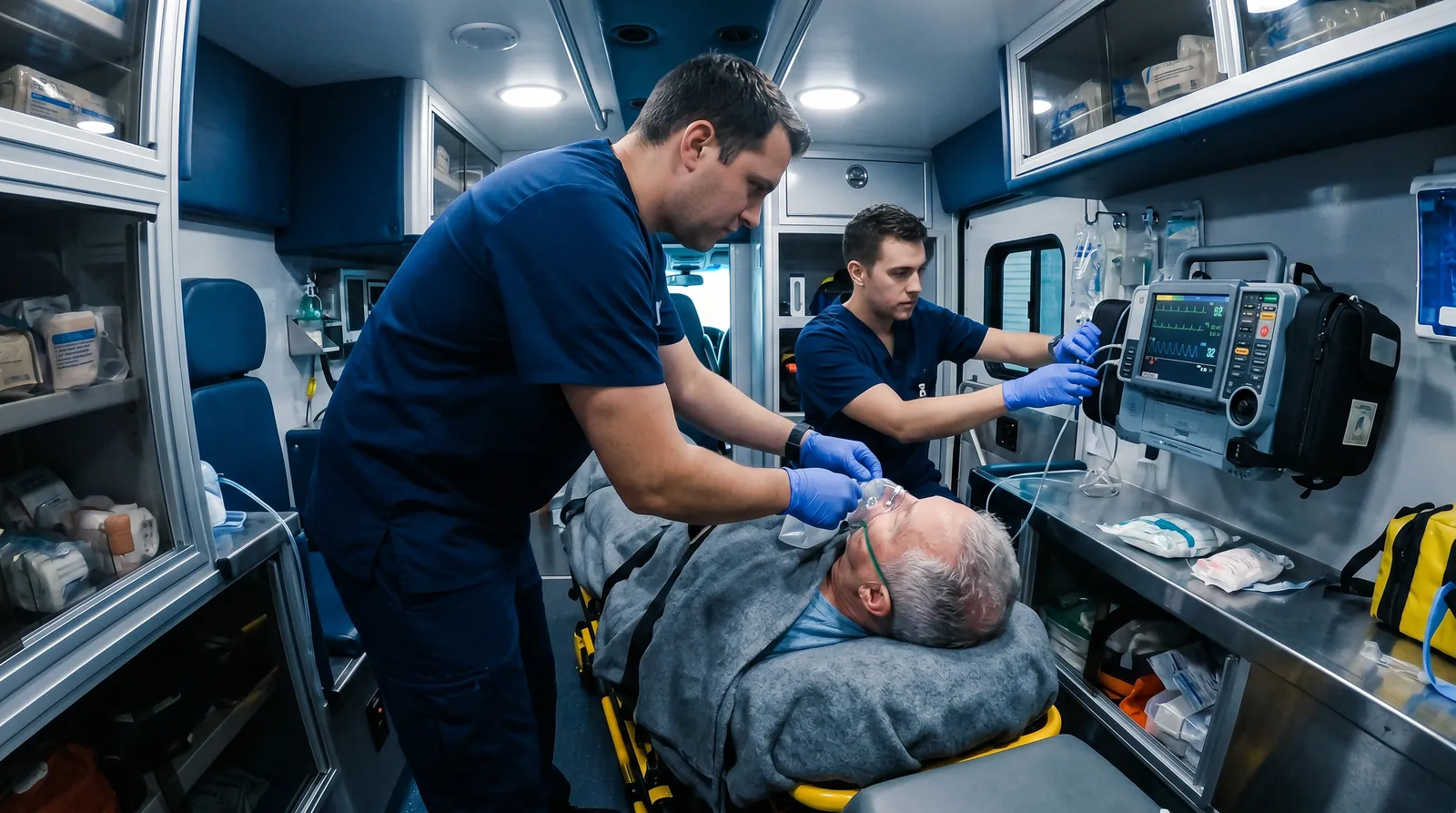
Pushed to your ePCR — 2 fields to confirm
Shown with VeriMedic body cameras. QA and analytics also work without footage.
Traditional ePCR QA reviews the record. VeriMedic reviews the call.
Most EMS quality assurance starts with the patient care record a crew typed after the call — then audits a sample of those records for completeness and protocol adherence. The problem is the source: the record is a memory of the call, not the call itself. Missed steps, late interventions, and timing gaps are invisible if they were never written down.
Traditional ePCR QA is the practical choice for low-volume agencies running basic record-completeness audits on a sample of calls. VeriMedic CaseSync fits agencies that need clinical-truth QA at scale — grading every call against synchronized body-camera, monitor, and CAD footage instead of the crew's self-reported narrative, surfacing missed or late interventions, and pre-filling NEMSIS fields into the ePCR they already use.
VeriMedic vs. traditional ePCR QA, side by side.
The same QA questions, answered two ways: from the record your crew typed, or from the call your cameras and monitors actually recorded.
| Dimension | Traditional ePCR QA | VeriMedic CaseSync |
|---|---|---|
| Source of truth | The narrative a crew types after the call, from memory | Synchronized body-camera video, monitor data, and CAD — what actually happened |
| Calls reviewed | A manual sample of records, audited one at a time | Every call captured and available to review |
| What reviewers see | What was documented | What was seen, said, and done on scene |
| Protocol grading | Graded against the written narrative | Graded against footage, time-stamped to the second |
| Missed or late interventions | Invisible if they were never documented | Visible on the synchronized timeline |
| Documentation effort | Crew retypes the record from memory | Crew confirms pre-filled NEMSIS fields |
| Reviewing one call | Pull the record, reconcile sources, interview the crew | Watch the call play out on one timeline |
| Your ePCR | The system QA reviews after the fact | Fed directly — VeriMedic is not an ePCR and does not replace yours |
VeriMedic doesn't replace your QA program or your ePCR. It changes what QA is built on — the call itself, instead of the record written after it.
Two QA workflows, two sources of truth.
The difference isn't a better checklist. It's whether the review is built on what was documented or on what actually happened.
Traditional ePCR QA
- 1
Crew types the patient care record from memory after the call
- 2
QA pulls a sample of completed records to audit
- 3
Reviewer reconciles the narrative against monitor strips and CAD by hand
- 4
Reviewer grades the call against protocol using what was documented
- 5
Gaps get flagged — but only if they made it into the record
VeriMedic CaseSync QA
- 1
Body camera, monitor, and CAD capture the call as it happens
- 2
CaseSync reconciles every stream onto one synchronized timeline
- 3
Pre-filled NEMSIS fields are pushed into your existing ePCR to confirm
- 4
Your medical director grades the call against synchronized footage
- 5
Missed or late steps surface on the timeline, not just on the record
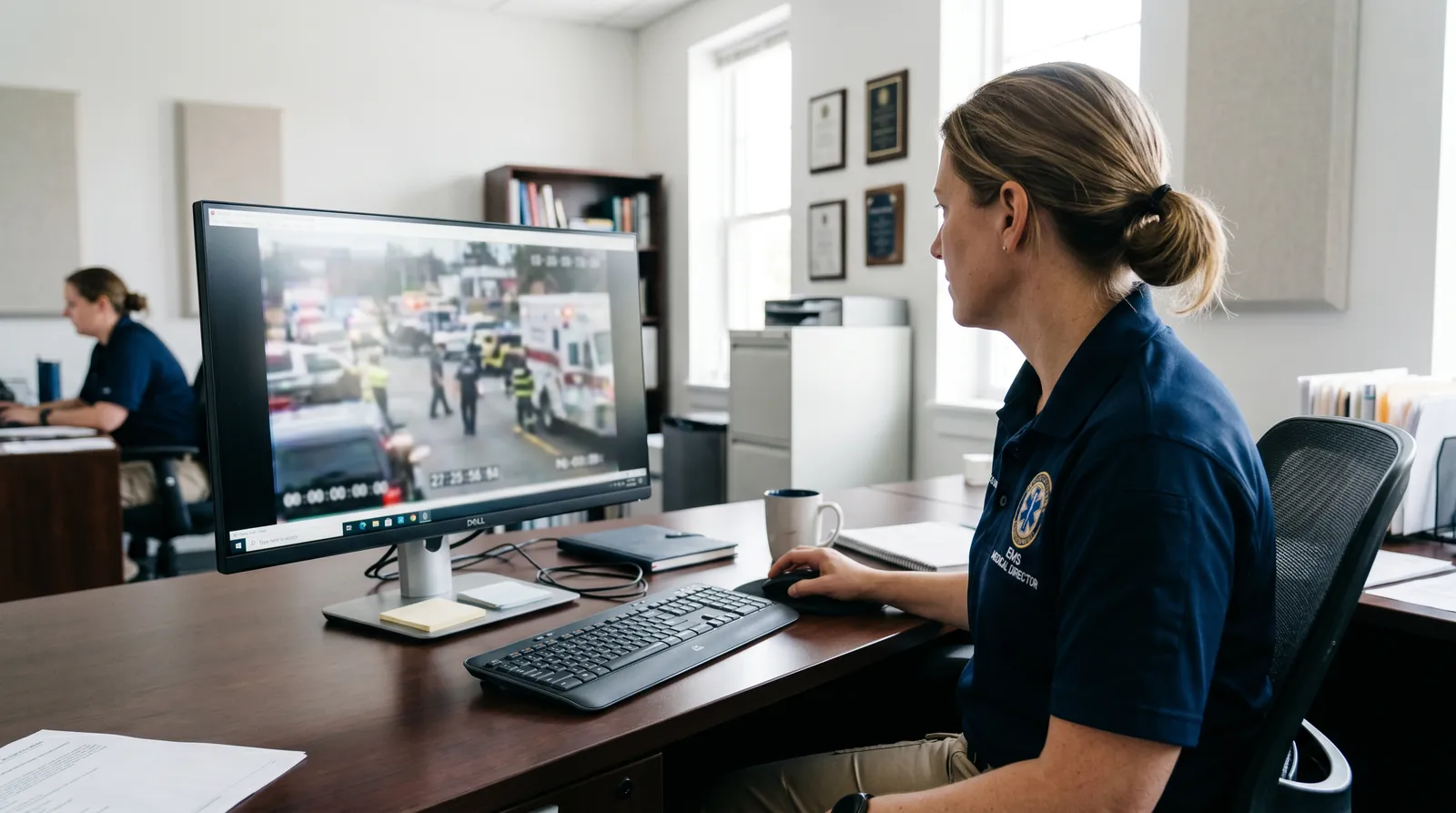
Built in Lancaster, PA by people who run the call.
VeriMedic isn't a body-camera platform built for law enforcement and adapted for EMS. It was built by the people who answer the call, review the record, and answer for the record.
- Practicing paramedics
- Designed by paramedics who record after every call.
- An EMS medical director
- QA logic built around real protocol review.
- A data architect
- Built to reconcile video, monitor, and CAD streams.
VeriMedic vs. traditional ePCR QA: common questions
Straight answers for QA managers and operations leaders weighing the two approaches.
- Is VeriMedic better than traditional ePCR QA?
- VeriMedic and traditional ePCR QA answer different questions. Traditional QA audits whether the record is complete and compliant. VeriMedic CaseSync grades whether the call matched protocol, using synchronized body-camera, monitor, and CAD footage as the source of truth instead of the crew's written narrative.
- What is the difference between VeriMedic and traditional ePCR QA?
- Traditional ePCR QA reviews the patient care record a crew types after the call. VeriMedic CaseSync reviews the call itself, reconciling body-camera video, monitor data, and CAD onto one timeline, then pre-filling NEMSIS fields into the agency's existing ePCR for the crew to confirm.
- Is VeriMedic cheaper than traditional ePCR QA?
- VeriMedic pricing is set per agency and includes body cameras plus the CaseSync platform. Rather than competing on a lower audit cost, VeriMedic reduces the manual labor of reconstructing and reconciling records and lets a medical director review calls against footage instead of self-report.
- Can VeriMedic replace traditional ePCR QA?
- VeriMedic changes what QA is built on rather than replacing the QA program itself. CaseSync feeds pre-filled NEMSIS fields into the existing ePCR and gives reviewers synchronized footage to grade against, so protocol review is based on the call instead of the record written afterward.
- Who should use traditional ePCR QA instead of VeriMedic?
- Low-volume agencies that only need basic record-completeness and compliance audits on a sample of calls may find traditional ePCR QA sufficient. VeriMedic CaseSync fits agencies that want clinical-truth QA across every call, grounded in synchronized footage rather than self-reported documentation.
Request a demo
Tell us what data your agency has and what you want to review. We'll walk you through CaseSync for QA and analytics, with or without body cameras.
For ambulance companies & paramedics