How CaseSync turns the call into a confirmed record.
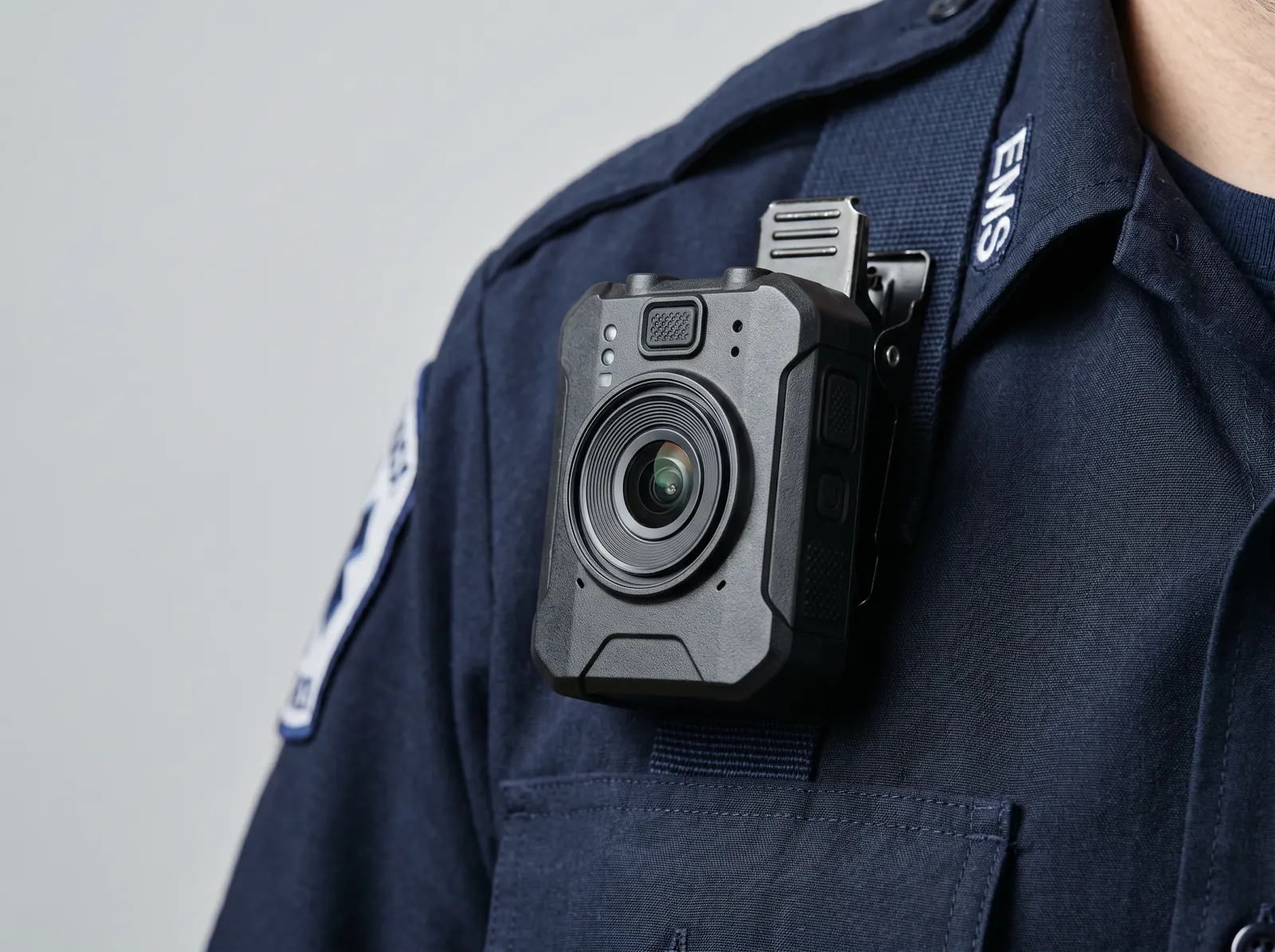
VeriMedic makes CaseSync, an EMS-specific body-camera and software platform. CaseSync syncs body-camera video, monitor data, and CAD onto one timeline, drafts supported NEMSIS fields, and pushes them into the ePCR you already use for paramedic confirmation. CaseSync does not replace the ePCR.
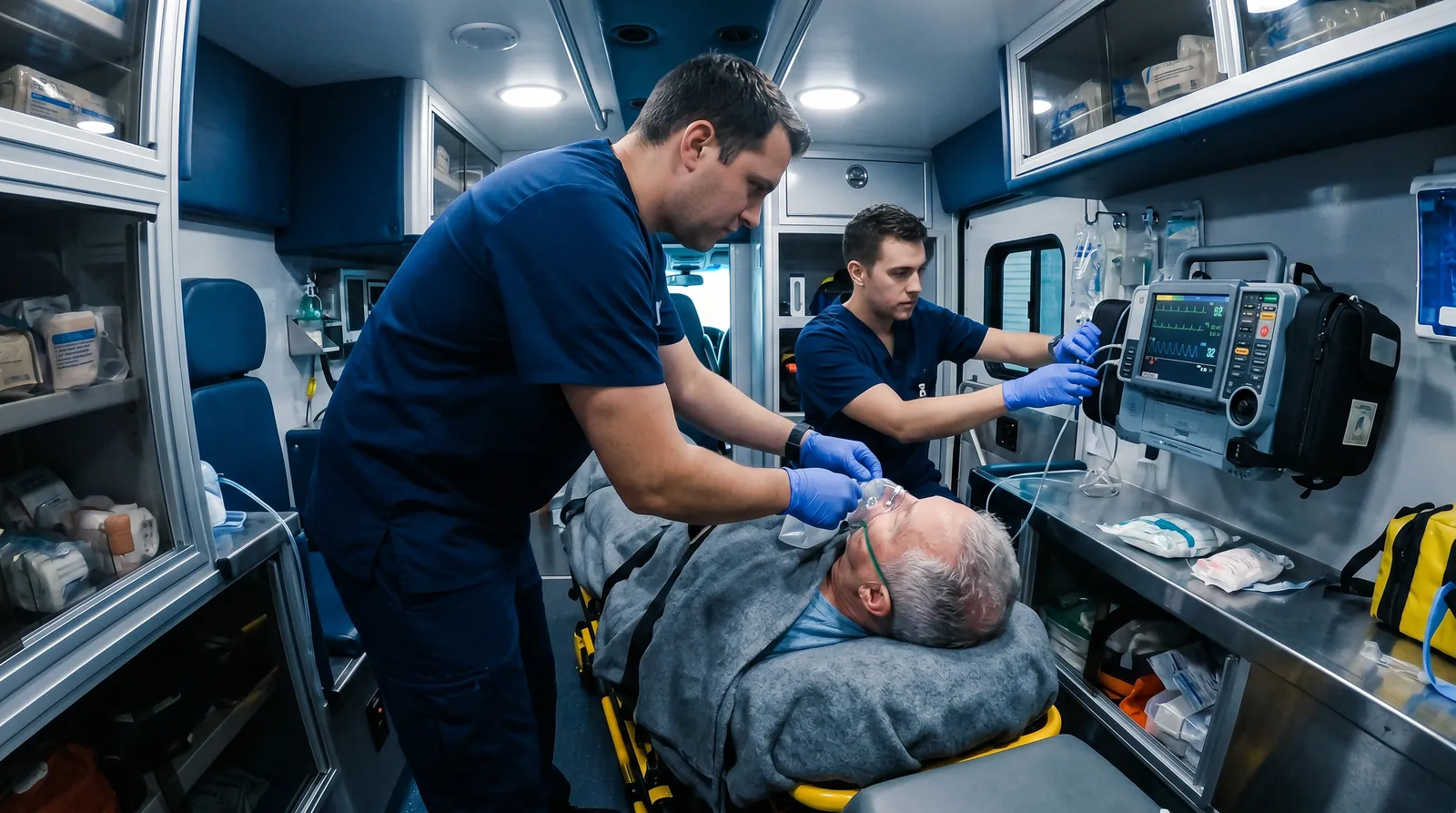
Pushed to your ePCR — 2 fields to confirm
Shown with VeriMedic body cameras. QA and analytics also work without footage.
Add footage to the call timeline.
With VeriMedic body cameras, CaseSync aligns footage with monitor and CAD data. That added view helps reviewers check what happened on scene while supported NEMSIS fields flow into your existing ePCR.
Body-camera video
What was seen, said, and done on scene.
Monitor data
Vitals, 12-lead, and device readings.
CAD
Dispatch times, units, and call events.
Pre-filled fields in your ePCR, confirmed in minutes
Paramedics confirm. Medical directors review against protocol.
From footage to a confirmed record, step by step.
CaseSync sits between the call and the ePCR you already use. Here is exactly what happens between the body camera turning on and a pre-filled record waiting for your paramedic to confirm.
VeriMedic makes CaseSync, an EMS-specific body-camera and software platform. CaseSync synchronizes body-camera video, cardiac monitor data, and CAD onto one timeline, drafts supported NEMSIS fields, and pushes them into the agency's existing ePCR for paramedic confirmation. CaseSync does not replace the ePCR. The same timeline supports protocol-graded QA. Read the EMS body-camera documentation workflow, the NEMSIS data standards and fields guide, and the EMS QA and record-accuracy guide for the supporting context.
- 01
Capture the call as it happens
The VeriMedic body camera records what was seen, said, and done on scene. In parallel, your monitor streams vitals and 12-lead readings and CAD logs dispatch, response, and on-scene times. Nothing extra for the crew to do — they run the call.
- 02
Reconcile every stream onto one timeline
CaseSync aligns body-camera video, monitor data, and CAD against a single clock, so a 12-lead, a med push, and a spoken chief complaint all line up to the exact second they occurred. That synchronized timeline becomes the objective ground truth for the call.
- 03
Draft pre-filled NEMSIS fields from the footage
VeriMedic reads the synchronized timeline and turns what actually happened into structured, pre-filled NEMSIS fields — times, vitals, interventions, chief complaint, and a narrative drafted from the timeline itself.
- 04
Push the fields into your existing ePCR
The pre-filled NEMSIS fields land directly in the ePCR your agency already uses. VeriMedic is not an ePCR and not a documentation platform — it feeds yours, so there is no system to switch and no workflow to replace.
- 05
Confirm, then QA against protocol
Your paramedic confirms the pre-filled record instead of retyping it from memory. Your medical director grades the call against protocol using the same synchronized footage — review built on objective truth, not self-report.
Every moment on the call maps to a field in your ePCR.
CaseSync doesn't guess. Each pre-filled NEMSIS field traces back to something the timeline can prove — so your crew confirms a record that matches the footage instead of reconstructing one from memory.
| On the call | NEMSIS field, pre-filled → your ePCR |
|---|---|
| Dispatch tones drop; unit marks en route and on scene | eTimes — call, dispatch, and response times (from CAD) |
| Provider holds the patient's driver's license up to the camera | ePatient — name, date of birth, address, and demographics |
| Monitor captures vitals and a 12-lead | eVitals — HR, BP, SpO₂, and 12-lead readings |
| Paramedic gives ASA and starts an IV on video | eMedications & eProcedures — interventions with timestamps |
| The full call plays out on the synchronized timeline | eNarrative — drafted from the timeline, ready to confirm |
VeriMedic feeds the ePCR your agency already runs on. There's no new documentation system to learn — just a record that arrives mostly written.
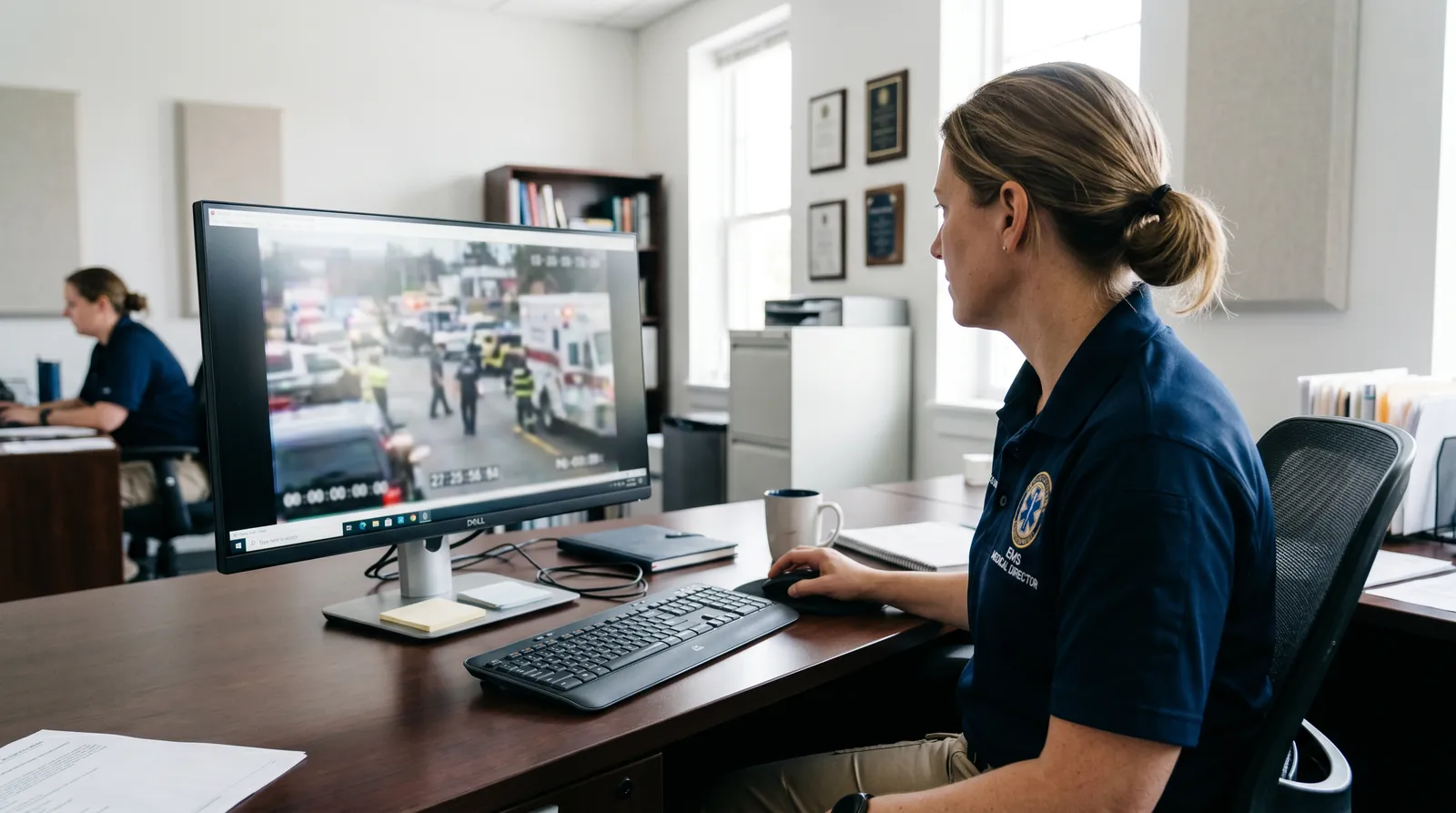
Your medical director grades the call, not the paperwork.
Once the record is confirmed, the same synchronized timeline becomes the basis for QA — so review is built on objective ground truth instead of self-report.
- Grade against protocol, not memory
- The medical director reviews each call against your agency's protocols using the synchronized timeline — the same body-camera video, monitor data, and CAD the crew ran on. Judgments rest on what happened, not on how it was later remembered or written up.
- One objective record for every reviewer
- Because the timeline is the ground truth, QA officer, medical director, and crew are all looking at the same evidence. Reviews stop being a debate about the record and become a look at the call itself.
- Findings that trace back to the footage
- Every protocol grade links to the exact moment on the timeline it came from — so feedback is specific, defensible, and something a paramedic can actually learn from.
VeriMedic feeds your ePCR. It is not your ePCR.
This is the whole point of the workflow: CaseSync sits in front of the ePCR you already run on and fills it from the call itself. You keep your system of record — CaseSync just changes how it gets filled.
What VeriMedic does
- Reconciles body-camera video, monitor data, and CAD onto one synchronized timeline
- Drafts pre-filled NEMSIS fields from what the timeline can prove
- Pushes those fields into the ePCR your agency already uses
- Gives your medical director objective ground truth to grade calls against protocol
What VeriMedic is not
- Not an ePCR — it feeds yours, it doesn't replace it
- Not a documentation or billing platform to switch to
- Not a police body camera adapted for EMS
- Not another system your paramedics have to learn or type into
Built in Lancaster, PA by people who run the call.
VeriMedic isn't a body-camera platform built for law enforcement and adapted for EMS. It was built by the people who answer the call, review the record, and answer for the record.
- Practicing paramedics
- Designed by paramedics who record after every call.
- An EMS medical director
- QA logic built around real protocol review.
- A data architect
- Built to reconcile video, monitor, and CAD streams.
How CaseSync works: common questions
Straight answers about documentation, data sources, and your existing ePCR.
- How does body-camera footage become a NEMSIS field?
- CaseSync reconciles body-worn video, cardiac monitor data, and CAD onto one synchronized timeline. From that timeline it drafts the corresponding NEMSIS fields and pushes them into the agency's existing ePCR, where the crew confirms them instead of typing them from memory.
- Does the paramedic still have to fill out the record?
- The crew confirms rather than retypes. CaseSync pre-fills the NEMSIS fields from the synchronized record of the call, so the paramedic reviews and confirms accurate fields in their existing ePCR instead of reconstructing the call from memory at the end of a shift.
- Does CaseSync replace our ePCR?
- No. CaseSync feeds your existing ePCR. The agency keeps the ePCR it already uses for documentation, NEMSIS reporting, and billing; CaseSync changes how that record gets filled by drafting fields from the call itself.
- What data sources does CaseSync synchronize?
- CaseSync synchronizes body-worn camera video, cardiac monitor data, and CAD dispatch times onto a single timeline so every event in the call lines up against an objective, time-stamped record.
Request a demo
Tell us what data your agency has and what you want to review. We'll walk you through CaseSync for QA and analytics, with or without body cameras.
For ambulance companies & paramedics